

Drink Less, Drink Better: The No/Low Shift of 2026
Drinking less but better is a taste decision, not a diet. What the 2026 no/low numbers mean, and when alcohol-free actually holds up in the glass.

A friend ordered an alcohol-free gin and tonic at a bar recently and the bartender handed it over with an apology. “Sorry, it’s not the same.” Two years ago I would have agreed. Not anymore. Because the case for drink less, drink better in 2026 is no longer a compromise you apologise for, it is a choice that holds up in the glass. The numbers tell the same story, but I want to start with taste, because that is where the tipping point happened.
The figures first, since they are too big to ignore. According to Circana, 71 percent of Europeans buy, stock or drink less alcohol than a few years ago. The value of alcoholic drinks shrank by 1.8 percent, while the broader non-alcoholic category grew by 5.1 percent. That is not noise. That is a direction. And it is not only the youngest twenty-somethings: the 25-to-35 group is moving hard too. Around a quarter of them bought no alcohol at all this past year, the rest choose more deliberately what goes in the glass.
Less doesn’t mean duller, it means more selective
The word “moderation” sounds like settling. In practice the opposite happens. People who drink less want the times they do drink to count. That is the whole logic of premiumisation: the budget freed up by skipping three midweek glasses goes to one weekend bottle worth opening.
I see it in how people buy wine. No longer the box of house red under ten euros, but a twenty-euro bottle with a story behind it. The market researchers call it “drink less, drink better”, and it is the one trend phrase from the reports I can repeat without cynicism. Because it works on both sides of the bottle: less volume, more value.
The same holds for the alcohol-free corner. The growth is not in bland soda pretending to be a grown-up drink. It is in products that take flavour seriously.
The taste threshold: when alcohol-free actually works
This is where my training kicks in, and my scepticism. There are roughly two ways to make an alcohol-free wine or beer. You can strip alcohol out of an existing product, through vacuum distillation or reverse osmosis. Or you build the product from the ground up to work without alcohol.
The first route often leaves a hollow middle. Alcohol carries body, the perception of sweetness, and the way aromas rise from the glass. Remove it and the drink collapses inward. That is why alcohol-free wine tasted for years like grape juice that had lost its soul.
The second route is where it gets interesting. Heineken opened a new R&D centre in Zoeterwoude, reportedly a roughly 45 million euro investment, to work on what they call flavour parity: an alcohol-free beer that sits next to the original without you tasting the difference. That is not marketing, it is a fermentation and yeast problem they are solving step by step. And de-alcoholising doesn’t have to mean a hollow middle, provided you do it well. French Bloom, in which LVMH took a minority stake, starts not from champagne but from purpose-made organic base wine, which it brings down to a 0.0 while holding on to the tension of bubbles and acidity.
You can taste the difference. A well-made alcohol-free sparkling has the friction you expect: acidity that pulls, a finish that doesn’t drop away immediately. A poorly made one has sugar where the structure should be. My rule of thumb: if it turns sweet to fill a gap, it failed.
RTDs and aperitifs: convenience wins
The fastest-growing format for drinking less but better is the ready-to-drink. Pre-mixed cocktails in a can, alcohol-free aperitifs, spritz variants you only need to open. Circana and IWSR consistently put the RTD category at the top of their growth figures, and in the Netherlands and Belgium the craft version of it leads the way.
I understand the resistance. A can sounds like settling for less craft. But the better RTDs are no longer sugar bombs. They use real botanicals, bitter herbs, infusions you won’t easily replicate at a home bar. The Italian aperitivo culture, which I saw up close at Conviv in Milan last year, now translates into alcohol-free versions that hold their own on a terrace.
Convenience has stopped being a dirty word. It is simply the form in which the modern drinker makes a choice.
Functional drinks: where I get critical
So much for the growth I believe in. Now the side where I raise an eyebrow. A large part of the marketing around no/low now leans on “functional” claims: adaptogens, nootropics, botanicals that are supposed to relax or focus you. Ashwagandha in your aperitif, L-theanine in your alcohol-free spritz.
This is where the story parts ways with the science. The doses in these drinks are usually too low to deliver the effect the label suggests. You pay a premium for a promise that is rarely demonstrable. I happily taste them, some genuinely taste good, but I buy them for the flavour and not for the supposed calm they deliver. Anyone buying a drink as medicine ends up disappointed, and the category undermines its own credibility doing it.
That is my first serious caveat about this trend. Flavour sells itself. Wellness claims that don’t hold up cost, over time, the trust the whole category needs.
The “non-alcoholic gin” problem
My second caveat is legal, and it says something about the growing pains of a young category. In 2025 the Court of Justice of the EU ruled that a product without alcohol cannot be called “non-alcoholic gin”. Gin is legally a distilled spirit of at least 37.5 percent alcohol. An alcohol-free botanical infusion is by definition not that, however good it tastes.
It sounds like nitpicking, but it hits the core. When a product’s name promises the taste of something it isn’t, you get disappointed drinkers. Someone who reads “gin” expects the bite of alcohol and the juniper push that comes with it. Hand them a watery herbal infusion and they bail, not just on that brand but on the whole category.
The better producers solve this by finding their own language. Not “non-alcoholic gin” but a “botanical distillate without alcohol”, or a brand name that promises nothing it cannot deliver. That is not semantics. That is the category growing up and learning to stand on its own legs instead of leaning on the name of its alcoholic sibling.
What I take to my own glass
The reports from Circana, IWSR, NielsenIQ and Mintel all point the same way, and I believe the direction. Not because a chart says so, but because I watch it happen at the table. People drink less, and they want that less to be worth something.
For me that means no all-or-nothing. It means a bottle open on the nights that count, and a well-made alcohol-free one next to the plate on the nights it doesn’t have to be. It also means staying critical: of sweet sparkling that lacks structure, of wellness claims without a dose, of labels that promise more than they deliver.
Drinking less but better is not a sacrifice. It is the luxury of making a real choice every time you pour. And in 2026, for the first time, that choice is worth it on both sides of the bottle.
On the figures: the percentages come from Circana’s 2025 European beverage analysis (roughly 71% buy, stock or drink less; alcohol -1.8 percent, the broader non-alcoholic category +5.1 percent) and IWSR. These are market movements, not exact forecasts. The figures have been fact-checked against the original sources.
Sources
- Circana, 71% of Europeans are drinking less alcohol (Beverage Forum 2025)
- IWSR Drinks Market Analysis, How is the moderation trend evolving? (no/low and RTD)
- Heineken, R&D centre Dr. H.P. Heineken Centre Zoeterwoude (investment approx. EUR 45m)
- LVMH takes a minority stake in French Bloom (alcohol-free sparkling)
- Court of Justice of the EU, 2025 ruling on the term “non-alcoholic gin” (gin requires min. 37.5% ABV)
- NielsenIQ + Mintel, consumer behaviour on low/no and premiumisation
More on Non-Alcoholic
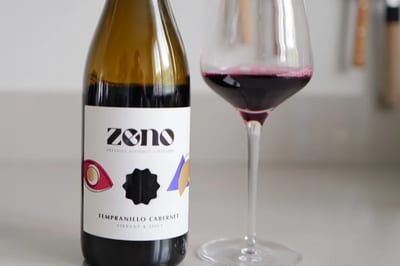
Zeno Tempranillo Cabernet: alcohol-free red
Zeno Tempranillo Cabernet is an alcohol-free red wine from Spain. Tasting notes, why alcohol-free red is the hardest category, and when it still works.
Read on →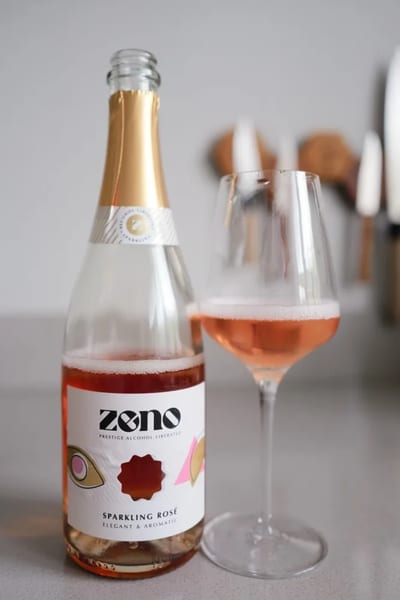
Zeno Sparkling Rosé: alcohol-free bubbles
Zeno Sparkling Rosé is an alcohol-free sparkling rosé from Spain. Tasting notes, how it compares to the Sparkling White, and when to pour it.
Read on →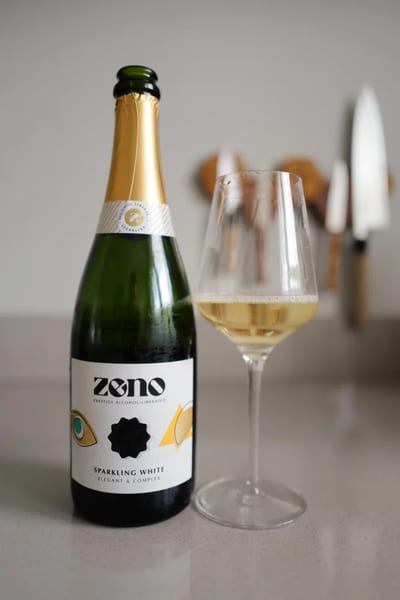
Zeno Sparkling White: alcohol-free bubbles
Zeno Sparkling White is an alcohol-free sparkler on Macabeo. Tasting notes, why bubbles rescue the genre, and where this bottle hits its limit.
Read on →